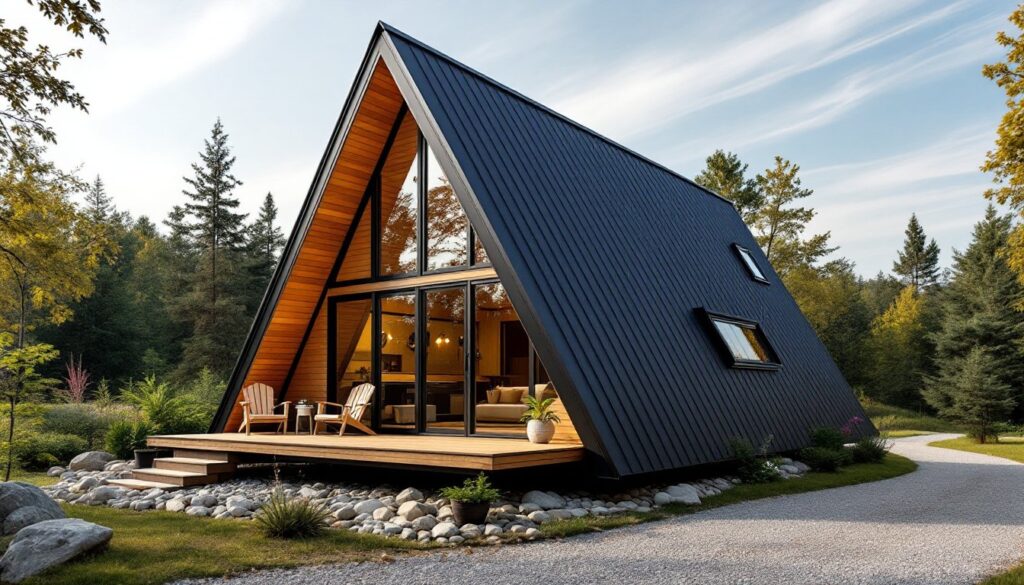

A-frame tiny homes blend iconic midcentury design with practical small-space living, and the market’s never been hotter. These triangular structures, recognizable from ski lodges and lakefront cabins, are now showing up as full-time residences, backyard ADUs, and off-grid retreats. Builders are churning out modern versions with improved insulation, better use of loft space, and surprisingly affordable price tags. Whether you’re downsizing, hunting for a weekend getaway, or looking to add rentable square footage to your property, knowing where to buy and what to watch for will save you time and money.
Table of Contents
ToggleKey Takeaways
- A-frame tiny homes for sale offer affordable, efficient small-space living with cost-per-square-foot advantages over conventional builds thanks to their triangular design requiring less exterior wall material.
- Many jurisdictions classify A-frame tiny homes under 400 square feet as accessory structures rather than primary dwellings, making them zoning-friendly options for ADUs and rentable properties.
- Prefab kits typically range from $15,000–$50,000 for shell-only packages and $50,000–$120,000 for turnkey models, though financing options are limited since many lenders won’t fund structures under 400 square feet or without permanent foundations.
- Essential inspection points include engineered lumber framing, proper insulation (R-30 minimum), moisture control with air barriers, loft headroom compliance, secondary egress windows, and flashing details to prevent water entry at the peak.
- Before purchasing, verify local zoning regulations, foundation requirements, utility hookup costs ($5,000–$15,000 typical), and whether your lot can accommodate delivery and assembly of your chosen A-frame tiny home.
- Check whether short-term rental use is permitted and confirm you have adequate homeowner’s or commercial insurance, as standard policies often exclude structures used for income-generating purposes.
Why A-Frame Tiny Homes Are Taking Over the Housing Market
A-frames tick boxes that matter in 2026: they’re affordable, they shed snow and rain without complex roofing, and they deliver serious curb appeal without requiring a contractor’s eye for proportion. The steeply pitched roofline, typically a 60-degree angle, means minimal flat roof surface to maintain, and the triangular profile naturally braces against wind loads better than a standard gable.
From a cost-per-square-foot standpoint, A-frames use less exterior wall material than conventional builds. You’re essentially wrapping the same triangle all the way from foundation to ridge beam. Prefab kits capitalize on this efficiency: many manufacturers cut and pre-drill panels in a factory, so on-site assembly can happen in days instead of weeks.
They’re also zoning-friendly in ways that surprise buyers. Many jurisdictions classify small A-frames under 400 square feet as accessory structures rather than primary dwellings, sidestepping some of the red tape that trips up other tiny home styles. That makes them popular as rental units on existing lots or as workshop-slash-guest-space hybrids. The vertical interior does eat into usable floor area, steep walls mean limited furniture placement, but clever loft design and built-ins turn that challenge into efficient storage.
Where to Find A-Frame Tiny Homes for Sale
Online Marketplaces and Specialty Retailers
Start with platforms that aggregate tiny home listings. Sites like Tiny House Listings and Tiny Home Builders maintain inventories of both completed structures and available lots with pre-approved models. You’ll also find turnkey A-frames on general real estate platforms, Zillow, Realtor.com, especially in rural markets where zoning allows alternative dwellings.
Social marketplaces matter more than you’d expect. Facebook Marketplace and Craigslist often feature owner-built A-frames or lightly used prefab units that someone’s upgrading out of. Scrutinize these closely: ask for original build plans, receipts for materials, and any engineering stamps if the structure was permitted. A low asking price can mean amateur framing or code violations you’ll inherit.
Specialty retailers like Avrame, Den, and Everywhere offer catalog models with transparent pricing and lead times. These companies ship flat-pack kits with CNC-cut panels, hardware packs, and assembly manuals. Shipping costs vary wildly, expect $3,000–$8,000 depending on distance and whether the kit includes windows and doors. Some retailers also maintain a network of certified installers if you’d rather not DIY the build.
Custom Builders vs. Prefab Kits
Custom builders give you control over layout, materials, and finishes, but you’re paying for design hours and change orders. Expect a timeline of four to eight months from contract to handoff, and budget for a general contractor if you’re not acting as your own. Custom builds make sense when you need non-standard dimensions, say, a foundation that fits an irregular lot, or when local codes require engineered plans with a PE stamp.
Prefab kits deliver speed and cost predictability. Most manufacturers provide stamped engineering drawings that satisfy building departments in all 50 states, and the tighter fabrication tolerances mean fewer on-site adjustments. The trade-off: you’re locked into the manufacturer’s floor plan and window schedule. Swapping a fixed window for a casement or moving a door opening often costs as much as a semi-custom build.
If you’ve got basic carpentry skills and a couple of friends, a prefab kit is manageable. You’ll need a circular saw or miter saw, a cordless drill, levels, clamps, and a step ladder or scaffolding to reach the upper wall panels. Most kits assume a prepared foundation, either a concrete slab, pier-and-beam, or skid foundation for movable structures. Don’t skip the foundation prep: even a half-inch out of level will throw off panel alignment and door operation.
What to Look for When Buying an A-Frame Tiny Home
Structural framing is non-negotiable. A-frames rely on the integrity of the rafter-to-floor connection: look for engineered lumber (LVL or glulam beams) at the ridge and eaves, not just dimensional 2x6s. Inspect bolted or screwed connections, lag screws should be galvanized or stainless, and any exposed hardware ought to include washers to prevent pull-through.
Insulation and moisture control separate a three-season shed from a year-round home. The roof/wall assembly should include a continuous air barrier and at least R-30 insulation in colder climates (check your local energy code, many now require R-38 or higher). Spray foam works well in A-frames because it seals the angular joints, but it costs more than batt insulation. If the seller mentions fiberglass batts, verify there’s a vapor barrier on the warm side and adequate roof ventilation to prevent condensation.
Check loft headroom and egress. Building codes typically require 35 inches of headroom over at least 50% of the loft area if it’s used as a sleeping space, and you need a secondary egress (window or door) that meets minimum dimensions, usually 24 inches wide by 20 inches tall with a sill no more than 44 inches above the floor. Many owner-built A-frames skip this, which creates resale and insurance headaches.
Window placement affects both light and thermal performance. South-facing glass captures passive solar heat in winter, but without overhangs or shades, you’ll overheat in summer. Low-E coatings and double-pane glass are standard: if you’re buying used and see single-pane, budget for replacements.
Finally, walk the exterior and look for flashing details around windows, doors, and the ridge cap. Water entry at the peak is common in poorly built A-frames, check for staining on interior sheathing or musty odors. Any build after 2020 should have peel-and-stick membrane (Ice & Water Shield or equivalent) at eaves and valleys.
Costs and Financing Options for A-Frame Tiny Homes
Prefab kit pricing runs $15,000–$50,000 for shell-only packages (framing, sheathing, roofing, windows, and doors). Add another $10,000–$30,000 for interior finishes, drywall or tongue-and-groove paneling, flooring, a basic kitchen, bathroom fixtures, and electrical rough-in. If you’re hiring labor, tack on $20–$40 per square foot depending on your region and the crew’s experience with alternative builds.
Turnkey models, finished, delivered, and set on your foundation, range from $50,000 to $120,000 for units between 250 and 600 square feet. High-end versions with sustainable materials or off-grid systems (solar array, composting toilet, rainwater catchment) can push past $150,000.
Financing is trickier than a conventional mortgage. Many lenders won’t write loans on structures under 400 square feet or on homes without a permanent foundation. Personal loans and RV loans are common workarounds, but expect higher interest rates (7–12% as of early 2026) and shorter terms. Some builders offer in-house financing or partnerships with credit unions familiar with tiny home projects.
If the A-frame qualifies as an accessory dwelling unit (ADU) on a lot you already own, you might tap a home equity line of credit (HELOC) at lower rates. Another option: construction loans that convert to a mortgage once the structure is permitted and inspected. Check whether your local building department will issue a certificate of occupancy, without it, traditional mortgage financing is nearly impossible.
Don’t forget site work and utilities. Trenching for electric, water, and sewer can easily add $5,000–$15,000, more if you’re far from existing infrastructure. Off-grid setups save on hookup fees but require upfront investment in solar panels (budget $8,000–$15,000 for a modest system) and a septic or composting solution.
Placement, Zoning, and Legal Considerations
Zoning rules vary wildly, even within the same county. Many jurisdictions set minimum square footage for primary residences, often 600 to 1,000 square feet, which disqualifies most tiny A-frames unless they’re classed as ADUs or recreational structures. Call your local planning department before you buy: some areas allow tiny homes only in mobile home parks or on agricultural land with special permits.
Foundation type affects classification. A-frames on permanent foundations (concrete slab, frost footings) are more likely to pass muster as legal dwellings. Structures on skids or trailers often fall into a regulatory gray zone, some places treat them as RVs (subject to time limits on occupancy), others as unpermitted buildings. If you plan to move the home later, skids offer flexibility, but you’ll sacrifice financing and insurance options.
Setbacks and lot coverage matter for suburban placements. Most codes require structures to sit a certain distance from property lines, typically 5 to 15 feet on sides and rear, more on the front. The A-frame’s footprint counts toward your lot’s maximum coverage percentage, which can range from 30% to 60% depending on zoning district.
Utilities and permits are non-negotiable for legal occupancy. You’ll need a building permit (which triggers plan review and inspections), an electrical permit for any 120V or 240V wiring (must comply with NEC), and often a plumbing permit if you’re connecting to municipal sewer or installing a septic system. Some buyers try to skirt permits by claiming the structure is a “shed,” but using it as a dwelling without permits risks fines and a certificate of non-compliance that kills resale value.
If the property will generate income, say, as an Airbnb or long-term rental, verify that short-term rentals are allowed and whether you need a business license or special insurance. Homeowner’s policies often exclude structures used for commercial purposes: you’ll want a landlord or commercial policy that covers liability and property damage.
Finally, consider access and parking. Many A-frame buyers underestimate how tight a delivery truck’s turning radius is. If your lot requires a narrow driveway or has overhead utility lines, a prefab delivery might not be feasible. You’ll need to arrange a crane or smaller transport, which adds cost and complexity. For kits, make sure you’ve got room to stage materials and a relatively flat assembly area, building on a slope is doable but requires extra bracing and leveling.