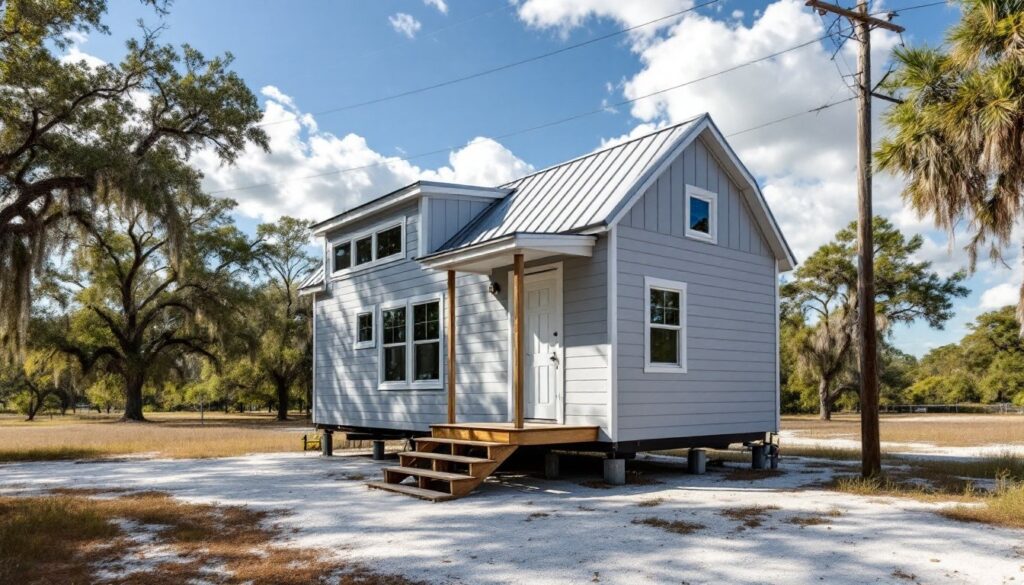

Florida’s year-round warmth, lower cost of living in many counties, and sprawling rural areas make it one of the most attractive states for tiny house enthusiasts. Whether someone’s drawn to beach access, tax advantages, or simply embracing a minimalist lifestyle, the Sunshine State offers unique opportunities, and challenges, for those looking to downsize. But Florida’s appeal comes with a maze of zoning regulations, climate considerations, and permitting requirements that vary wildly from one county to the next. This guide walks through everything needed to successfully establish a tiny house in Florida, from legal compliance to hurricane-resistant design.
Key Takeaways
- Florida’s year-round warmth, no state income tax, and rural land availability make it an attractive location for tiny house living, though hurricane-resistant design and permitting requirements vary significantly by county.
- Tiny houses in Florida must comply with county-specific zoning regulations rather than state law, with foundation-based homes needing IRC Appendix Q standards and tiny houses on wheels typically restricted to RV-zoned areas or mobile home communities.
- Counties like Sarasota, Suwannee, and Pasco have adopted more permissive tiny house codes, allowing foundation-based ADUs or agricultural-zone structures with clearer permitting processes than less-friendly jurisdictions.
- Budget realistically for a tiny house in Florida at $60,000 to $130,000 total, including dwelling costs ($35,000–$70,000), land ($15,000–$40,000), utilities and site prep ($8,000–$15,000), and permits ($2,000–$5,000).
- Hurricane-resistant design is non-negotiable in Florida tiny houses, requiring engineered tie-downs, impact-rated windows, metal roofing, and proper ventilation to manage moisture and withstand wind loads of 130–180 mph.
- Success with a tiny house in Florida depends on researching local zoning codes early, using Florida-based builders familiar with climate-specific requirements, and avoiding out-of-state purchases that may lack proper code compliance and require costly retrofits.
Why Florida Is Perfect for Tiny House Living
Florida’s climate eliminates the need for heavy insulation and expensive heating systems that burden tiny homeowners in northern states. With average winter temperatures rarely dipping below 60°F in most regions, heating costs stay minimal. The state’s no income tax policy stretches budgets further, a significant advantage when living on reduced square footage and potentially lower household expenses.
The abundance of rural land in counties like Highlands, Polk, and Sumter means finding affordable lots is more feasible than in states with limited available acreage. Many Floridians already embrace alternative housing, from RV parks to mobile home communities, creating a culture more accepting of non-traditional dwellings.
Proximity to both coasts offers lifestyle flexibility. Someone can park a tiny house within an hour of Atlantic or Gulf beaches while maintaining lower property costs than directly coastal areas. The state’s outdoor recreation, fishing, kayaking, hiking in state forests, aligns naturally with the tiny house ethos of prioritizing experiences over possessions.
But, the trade-off comes in hurricane preparedness and humidity management. Florida’s climate demands specific building strategies that northern tiny house designs don’t address. Coastal wind zones require engineered tie-downs and impact-resistant windows, adding upfront costs but providing essential storm protection.
Understanding Florida’s Tiny House Laws and Zoning Regulations
Florida has no statewide tiny house legislation, leaving regulation entirely to counties and municipalities. This creates a patchwork of rules where a dwelling legal in one county could violate codes twenty miles away. The state follows the Florida Building Code (FBC), which incorporates the International Residential Code (IRC) with Florida-specific amendments focused on wind resistance and storm protection.
Tiny houses on foundations typically must meet the IRC Appendix Q standards for structures under 400 square feet. This includes minimum ceiling heights of 6 feet 8 inches (with bathrooms and kitchens allowed at 6 feet 4 inches), emergency escape windows, and loft ladder/stairway requirements. Structures must pass electrical, plumbing, and structural inspections like any traditional home.
Tiny houses on wheels (THOWs) occupy a gray area. Most counties classify them as RVs, which means they’re only legal in areas zoned for recreational vehicles or mobile homes, typically RV parks, campgrounds, or agricultural zones with accessory dwelling provisions. Some counties prohibit RVs as primary residences entirely, while others allow them with conditional use permits.
Permit requirements apply to nearly all tiny house installations. Foundation-based structures need building permits, and even THOWs often require zoning approval and site development permits. Septic or sewer connections trigger additional health department permits, and electrical hookups must meet National Electrical Code (NEC) standards with licensed electrician sign-off in most jurisdictions.
County-Specific Rules and Where Tiny Houses Are Welcomed
Sarasota County has emerged as relatively tiny-house-friendly, allowing ADUs (accessory dwelling units) as small as 300 square feet on properties with existing primary residences. The county requires permanent foundations, full utility connections, and compliance with setback requirements, typically 10 feet from side property lines and 25 feet from front lines.
Suwannee County in north-central Florida permits tiny houses in agricultural zones with minimal restrictions. Properties zoned AG-1 allow structures under 600 square feet without the need for a primary dwelling, though well and septic permits are mandatory. This rural county attracts tiny house owners seeking land affordability and regulatory flexibility.
Brevard County allows THOWs in designated mobile home parks but prohibits them as permanent dwellings on private lots in most residential zones. The county does permit foundation-based tiny homes under ADU provisions in single-family residential areas, provided they meet minimum square footage requirements of 450 square feet for the primary structure.
Pasco County recently updated codes to explicitly allow tiny houses on foundations in residential zones, requiring compliance with standard setbacks and IRC Appendix Q. THOWs remain restricted to RV-zoned areas. The county’s Building Division provides a specific checklist for tiny house permitting, streamlining the approval process compared to counties without clear guidance.
Before purchasing land or a tiny house, anyone should contact the local building department and planning/zoning office directly. Online zoning maps provide starting points, but code interpretations often require in-person consultation. Some counties demand engineered plans stamped by a Florida-licensed engineer, particularly in high-velocity hurricane zones.
Best Locations in Florida for Placing Your Tiny House
Central Florida’s rural belt, including Highlands, Hardee, and Okeechobee counties, offers affordable land with fewer regulatory hurdles. Unincorporated areas in these counties often have lower minimum square footage requirements and more lenient zoning for agricultural properties. Land prices range from $3,000 to $8,000 per acre depending on road access and utilities, significantly less than coastal areas.
North Florida counties like Suwannee, Gilchrist, and Levy provide similar affordability with slightly cooler winters and proximity to natural springs and state forests. These areas attract off-grid tiny house owners due to rural electric cooperative availability and well-drilling feasibility. Flood zones are less prevalent than in coastal or south Florida regions, reducing insurance costs.
Established tiny house communities offer turnkey solutions with infrastructure already in place. Orlando Lakefront at College Park allows THOWs with shared amenities, while smaller private communities in Ocala and Gainesville provide parking solutions with utilities. These communities handle zoning compliance, though monthly lot fees typically run $400 to $700, including water, electric, and sewer.
RV parks and mobile home communities throughout the state increasingly accommodate tiny houses, especially THOWs built to RVIA (RV Industry Association) standards. Parks near Tampa, Lakeland, and Fort Myers often allow permanent residence with park model certification. But, rules vary drastically, some parks enforce strict RV-style aesthetics, while others welcome custom tiny house designs.
Coastal areas present challenges beyond cost. Properties in FEMA flood zones (A, AE, VE) require flood insurance, often adding $1,500 to $3,000 annually for structures under $100,000 in value. Wind mitigation features become mandatory in coastal wind zones, increasing construction complexity and expense.
Building vs. Buying a Tiny House in Florida
Building from scratch allows customization for Florida’s specific climate demands but requires significant time investment and DIY skills or contractor costs. A custom build on a foundation typically ranges from $45,000 to $90,000 for a 400-square-foot structure, depending on finishes and whether the owner performs labor. DIYers can reduce costs by 30-40% but should realistically budget 800 to 1,200 hours of work for a complete build.
Foundation choices in Florida lean toward pier and beam systems using concrete piers and pressure-treated 2×8 or 2×10 joists. This elevation strategy manages flood risk and allows airflow beneath the structure, reducing moisture issues. Slab foundations work in non-flood zones but require proper vapor barriers and perimeter drainage in Florida’s high water table conditions.
Buying a pre-built tiny house simplifies the process but limits customization. Florida-based builders like Movable Roots in Melbourne and Tiny House Siesta in Sarasota construct homes designed for local conditions, with hurricane straps, impact windows, and proper ventilation systems built in. Expect $60,000 to $120,000 for turnkey THOWs from established builders, with Florida-specific features adding a 15-20% premium over standard builds.
Out-of-state purchases save money initially but often lack Florida Building Code compliance. Bringing in a THOW from Colorado or Oregon means retrofitting for wind loads, adding hurricane anchoring, and potentially failing local inspections. Transport costs from distant states add $3 to $5 per mile, making a West Coast purchase expensive before considering code upgrades.
Used tiny houses appear regularly on Facebook Marketplace and Tiny House Listings, often from owners relocating or upgrading. Prices range from $25,000 to $60,000 depending on age, condition, and features. Anyone considering used structures should verify code compliance in their target county and budget for potential updates to electrical, plumbing, and structural systems.
Essential Design Considerations for Florida’s Climate
Hurricane resistance drives nearly every structural decision. Tiny houses in Florida’s wind zones (typically 130 to 180 mph design standards depending on coastal proximity) require engineered tie-down systems. For THOWs, this means frame-mounted anchor points spaced no more than 8 feet apart along the chassis, connecting to ground anchors or concrete foundations. Foundation-based structures need hurricane straps connecting rafters to wall plates and walls to foundation, all specified by an engineer’s stamped plans.
Windows and doors in coastal areas must meet Miami-Dade County impact standards or have approved storm shutters. Impact-rated windows cost $400 to $900 per unit for tiny house-sized openings, versus $150 to $300 for standard double-pane windows. This isn’t optional in high-velocity hurricane zones, it’s code.
Ventilation prevents the mold and mildew issues that plague poorly designed Florida structures. Cross-ventilation with strategically placed windows creates airflow without constant AC use. Ridge vents and soffit vents maintain attic or loft air circulation, critical in a climate where summertime humidity regularly exceeds 70%. Some tiny house owners install whole-house fans for evening cooling, pulling in outside air once temperatures drop below indoor temps.
Insulation strategy differs from northern climates. Spray foam insulation (closed-cell, R-6 to R-7 per inch) creates a moisture barrier while providing thermal resistance. Fiberglass batts can trap humidity and promote mold growth unless paired with proper vapor barriers. Many Florida tiny houses use R-13 to R-19 in walls and R-30 to R-38 in ceilings, enough to manage AC efficiency without the R-40+ overkill needed in Minnesota.
Metal roofing outperforms shingles in Florida’s sun and storm conditions. Standing seam metal roofs shed water effectively, resist wind uplift when properly fastened, and reflect solar heat better than dark asphalt shingles. Expect to pay $8 to $12 per square foot installed, versus $3 to $5 for architectural shingles, but the longevity and storm resistance justify the cost.
Cooling demands exceed heating by a wide margin. Mini-split heat pumps sized at 9,000 to 12,000 BTU handle most tiny house cooling loads efficiently. Units with SEER ratings above 16 reduce electric bills in climates where AC runs eight months yearly. Some owners add ceiling fans and strategically designed spaces to reduce cooling loads, though high-efficiency AC remains essential for comfort.
Exterior materials must withstand UV exposure and moisture. Hardie board (fiber cement siding) resists rot and termites better than wood, though it’s heavier, a consideration for THOWs. Treated plywood sheathing (minimum 7/16-inch OSB or 1/2-inch plywood) rated for high-moisture exposure prevents structural deterioration. All exterior fasteners should be stainless steel or hot-dipped galvanized to prevent rust in Florida’s humid, salt-air conditions.
Costs and Budgeting for a Tiny House in Florida
Land costs vary dramatically by region. Rural interior counties offer parcels from $15,000 to $40,000 for 1-5 acres with road access. Coastal areas or near major metros like Tampa and Orlando run $50,000 to $150,000 for similar acreage. Unincorporated county land reduces ongoing costs, no municipal utilities, lower property taxes, but requires wells, septic systems, and longer drives to services.
Utility connections add substantial upfront costs. Well drilling runs $3,000 to $8,000 depending on depth, typically 80 to 200 feet in most Florida regions. Septic systems for tiny houses (usually 500 to 750 gallon tanks with standard drain fields) cost $4,000 to $7,000 installed. Electric service connection averages $1,500 to $3,000 if within 300 feet of existing lines: beyond that, power companies charge per-foot extension fees.
Off-grid systems appeal to some tiny house owners but require larger upfront investment. Solar arrays sized for Florida tiny houses (accounting for AC loads) typically need 3 to 5 kW of panels with battery storage, costing $15,000 to $25,000 for a complete system. Composting toilets eliminate septic needs, with quality units like Nature’s Head running around $1,000. Rainwater catchment systems work during Florida’s wet season but require storage for dry months, 500 to 1,000 gallon tanks add another $800 to $2,000.
Ongoing costs include property taxes (roughly 0.8% to 1.1% of assessed value annually in most counties), homeowners insurance ($800 to $2,000 yearly for tiny houses in non-coastal zones, $2,000 to $4,000 near coasts), and utilities. Electric bills for a 400-square-foot air-conditioned tiny house average $80 to $150 monthly with efficient mini-splits.
Permitting and inspection fees run $800 to $2,500 depending on county and whether the structure is on wheels or foundation. Some counties charge flat permit fees: others calculate based on project value. Budget for multiple inspection visits during construction, foundation, framing, electrical, plumbing, and final.
A realistic all-in budget for a tiny house setup in Florida looks like this: $35,000 to $70,000 for the dwelling itself (depending on DIY vs. builder), $15,000 to $40,000 for land, $8,000 to $15,000 for utilities and site prep, and $2,000 to $5,000 for permits and inspections, total project costs of $60,000 to $130,000 depending on choices and location. That’s substantially less than traditional Florida home ownership, but anyone entering the tiny house path should budget conservatively and avoid underestimating site development and code compliance costs.
For those looking to carry out strategies that align with simplified living approaches, Florida’s tiny house movement represents both opportunity and challenge. Success requires thorough research into local regulations, realistic budgeting that includes climate-specific upgrades, and honest assessment of whether the lifestyle fits personal needs. Those willing to navigate the permitting maze and invest in proper construction will find Florida’s climate, culture, and cost structure remarkably well-suited to tiny house living. The key lies in understanding that downsizing square footage doesn’t mean cutting corners on code compliance, safety, or long-term durability, especially in a state where the next hurricane season is never more than a few months away.