
West Virginia offers something most states can’t: affordable land, low property taxes, and mountain views that don’t quit. For anyone considering downsizing or embracing minimalist living, the state’s combination of natural beauty and budget-friendly real estate makes it a standout option. Tiny homes here aren’t just a trend, they’re a practical solution to rising housing costs and a chance to own property outright without decades of debt. Whether someone’s looking for a retirement retreat, a weekend getaway, or a full-time residence, West Virginia’s tiny home market has options worth exploring.
Table of Contents
ToggleKey Takeaways
- West Virginia’s tiny homes for sale offer exceptional value with land costs as low as $1,000–$3,000 per acre and low property taxes, making homeownership affordable and debt-free.
- Tiny home options include trailers (THOWs), foundation-built structures, prefab units, and container conversions, each with distinct financing, zoning, and insurance implications.
- Regulations vary significantly by county—always verify zoning codes, minimum dwelling sizes, and utility requirements with local planning offices before purchasing.
- Turnkey tiny homes range from $30,000–$80,000, while DIY builds and owner financing can reduce costs, though off-grid infrastructure like wells and septic systems require $10,000–$25,000 in additional investment.
- Buyers must prioritize winterization with proper insulation (R-30 ceilings, R-19 walls), conduct in-person property inspections for drainage and access, and secure title verification to avoid costly disputes.
Why West Virginia Is Perfect for Tiny Home Living
Land costs in West Virginia rank among the lowest in the eastern United States. Rural parcels often sell for $1,000 to $3,000 per acre, depending on location and access. That’s a fraction of what buyers pay in neighboring states like Virginia or Maryland. Combined with no statewide property tax on personal vehicles and relatively low assessed home values, ongoing ownership costs stay manageable.
The state’s topography, rolling hills, dense forests, and river valleys, provides natural privacy. Neighbors aren’t stacked on top of each other, which appeals to tiny homeowners seeking seclusion or off-grid setups. Many counties have minimal zoning restrictions outside incorporated towns, giving buyers flexibility in placement and use.
Utility access varies widely. In developed areas near Morgantown, Charleston, or the Eastern Panhandle, connecting to municipal water, sewer, and electric is straightforward. In remote hollows or mountaintop properties, expect to drill a well (typically $3,000–$8,000 for a residential well), install a septic system ($4,000–$10,000 for a standard system), and possibly rely on propane or solar power. Some tiny homeowners embrace off-grid living: others prefer the convenience of grid-tied infrastructure. West Virginia accommodates both.
The climate is four-season with cold winters. Snowfall in higher elevations can exceed 100 inches annually, so tiny homes need proper insulation, minimum R-30 in ceilings and R-19 in walls, and a reliable heating source. Propane wall heaters, wood stoves, or mini-split heat pumps are common choices. Summer humidity is moderate, and air conditioning isn’t always necessary in higher elevations.
Types of Tiny Homes Available in West Virginia
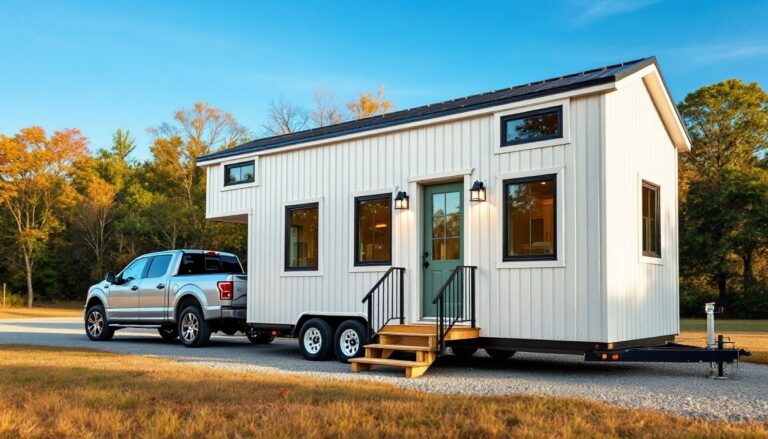
Tiny homes on wheels (THOWs) dominate the market. These are built on trailers, typically 8.5 feet wide by 20 to 30 feet long, and classified as RVs if they meet RVIA standards. Manufacturers often use 2×4 or 2×6 framing to keep weight under 10,000 pounds, the threshold for most standard truck towing. THOWs offer mobility but come with challenges: they’re harder to insure as permanent residences, and some counties treat them as RVs, restricting year-round occupancy on residential parcels.
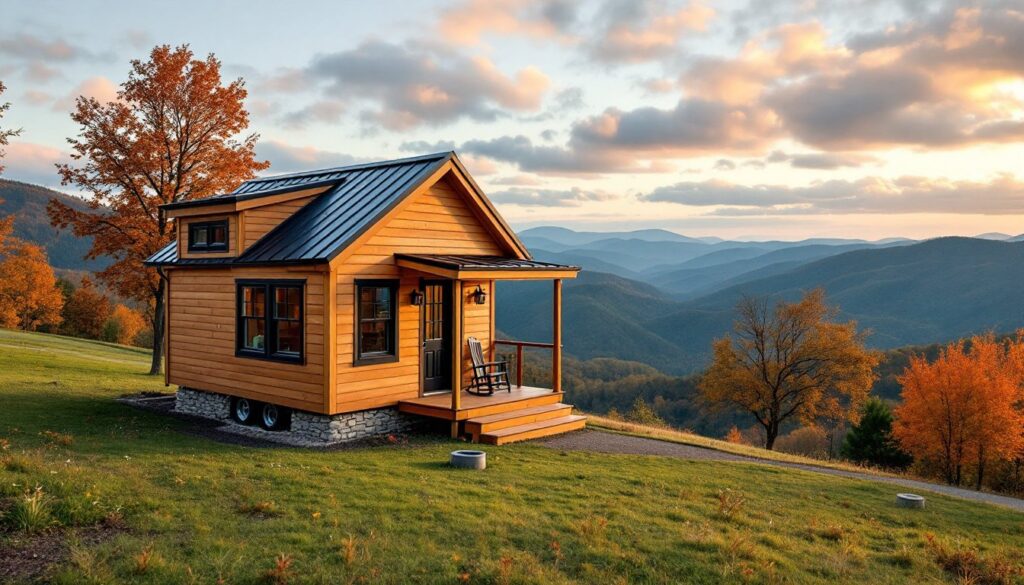
Foundation-built tiny homes are structures under 600 square feet on permanent foundations (piers, slabs, or crawlspaces). These qualify as standard dwellings under most county codes, making financing and permitting more straightforward. They can include features like reclaimed wood interiors for a rustic aesthetic that fits West Virginia’s landscape. Foundation models cost more upfront due to site work but appreciate like traditional homes.
Prefab and modular tiny homes arrive in sections and are assembled on-site. Companies deliver these to West Virginia regularly, though transport costs increase with distance from manufacturing hubs in North Carolina or Pennsylvania. Modular units must meet HUD code if classified as manufactured homes, which affects financing and placement regulations.
Container homes and converted sheds also appear in listings. Shipping containers (typically 8×20 or 8×40 feet) require significant modification, cutting openings, adding insulation, installing windows, and aren’t always cost-effective unless purchased used and modified DIY-style. Shed conversions are popular for buyers wanting to avoid manufacturer premiums, but they must meet building codes if used as dwellings, including egress windows and proper electrical (per NEC standards).
Where to Find Tiny Homes for Sale in West Virginia
Online marketplaces are the primary resource. Tiny House Listings, Tiny House Marketplace, and Facebook Marketplace feature active West Virginia sellers. Craigslist still hosts occasional listings, particularly for owner-financed deals or land-home packages.
Local builders and manufacturers operate in-state. Companies like Tiny Mountain Houses (based in Charleston) and regional builders in the New River Gorge area produce custom tiny homes and offer delivery within West Virginia. Contacting builders directly often yields better pricing than buying pre-built inventory, especially if the buyer is flexible on design.
Real estate agents in rural counties sometimes list tiny homes alongside traditional properties, especially in areas with vacation rental demand like Harpers Ferry or Fayetteville. Agents familiar with alternative housing markets understand zoning nuances and can steer buyers toward compliant parcels.
Top Regions and Cities for Tiny Home Buyers
The Eastern Panhandle (Berkeley, Jefferson, and Morgan counties) offers proximity to Washington, D.C., and Baltimore, making it attractive for weekend retreats. Land prices are higher here, $5,000 to $15,000 per acre, but zoning is more developed, and tiny homes on permanent foundations face fewer regulatory hurdles.
Morgantown and surrounding Monongalia County draw younger buyers and WVU affiliates. The area has a progressive vibe, and some landowners rent parcels specifically for tiny home placement. Expect more competition and higher prices near the city.
Fayetteville and the New River Gorge region cater to outdoor enthusiasts. The area’s tourism economy supports short-term rental income, and tiny homes here often double as Airbnb properties. Zoning is looser in unincorporated areas, but buyers should confirm short-term rental regulations if generating income is part of the plan.
Greenbrier County and the Allegheny Mountains provide affordable land and scenic isolation. This region suits off-grid setups and retirees seeking quiet. Winters are harsher, so homes need robust insulation and heating.
Southern coalfield counties (McDowell, Wyoming, Mingo) have the cheapest land, sometimes under $1,000 per acre, but infrastructure is sparse. These areas require self-sufficiency and a tolerance for limited services.
What to Know About West Virginia’s Tiny Home Regulations
West Virginia has no statewide zoning law. Regulations are set at the county and municipal level, creating a patchwork of rules. Some counties have no zoning outside town limits: others enforce minimum square footage requirements (often 600–1,000 square feet) that disqualify tiny homes.
Before purchasing, buyers should contact the county planning and zoning office and ask specific questions: Is there a minimum dwelling size? Are THOWs permitted as primary residences? What setback and septic requirements apply?
Building permits are required in most counties for foundation-built structures. THOWs classified as RVs may not need permits but could face restrictions on where they’re parked long-term. Some counties allow RVs on agricultural land or as accessory structures to a primary dwelling.
If the tiny home is built on-site rather than purchased turnkey, it must meet the International Residential Code (IRC) adopted by the state. That includes standards for egress (minimum one door and one egress window per sleeping area), ceiling height (minimum 6 feet 8 inches in habitable rooms), and electrical work (must follow NEC and be inspected).
Septic and well permits fall under the state Department of Health and Human Resources. A soil percolation test determines septic feasibility, and lot size minimums (often 0.5 to 1 acre) apply depending on the system type.
Some counties explicitly welcome tiny homes. Putnam and Cabell counties have relatively flexible codes. Others, like Kanawha County, enforce stricter standards. Always verify current regulations, codes change, and enforcement varies by inspector.
Pricing and Budget Considerations for West Virginia Tiny Homes
Turnkey tiny homes in West Virginia range from $30,000 to $80,000, depending on size, finishes, and whether they’re on wheels or a foundation. A basic 200-square-foot THOW with standard finishes runs $35,000–$50,000. Upgrading to hardwood floors, granite counters, or a composting toilet adds $5,000–$15,000. Foundation-built models start around $50,000 and climb with custom features.
DIY builds cut costs significantly. Buyers purchasing a shell or trailer and finishing the interior themselves can complete a tiny home for $15,000–$30,000, assuming they handle framing, electrical, and plumbing. This route demands skill and time, expect 6–12 months of part-time work.
Land costs vary by region. Budget $2,000–$10,000 for a rural acre in most counties, more in the Eastern Panhandle or near amenities. Site prep (grading, gravel driveway, utility trenching) adds $3,000–$10,000.
Utility hookups can surprise first-time buyers. Running electric from the road costs $1,000–$5,000 depending on distance. Drilling a well averages $5,000. Septic installation ranges from $4,000 (gravity system on ideal soil) to $15,000 (mound or sand filter systems on difficult sites). Off-grid solar setups start around $8,000 for a basic system with battery backup.
Financing is tricky. Traditional mortgages don’t apply to THOWs: buyers use personal loans, RV loans (if RVIA-certified), or pay cash. Foundation-built tiny homes under 600 square feet may qualify for small mortgages or construction loans, but not all lenders participate. Owner financing is common in West Virginia’s tiny home market, sellers often hold the note at 5%–8% interest.
Tips for Buying Your Tiny Home in West Virginia
Visit the property in person. Photos don’t reveal slope severity, road conditions, or how muddy the access gets in spring. A 4WD vehicle is often necessary for mountain parcels. Walk the land during wet weather to identify drainage issues.
Verify clear title. Some rural West Virginia parcels have murky ownership histories, especially in coalfield regions. Pay for a title search before closing. If the seller offers owner financing, ensure the deed is recorded promptly.
Confirm water and septic feasibility early. Order a perc test before finalizing a land purchase if a septic system is required. Some steep or rocky sites fail perc tests, making them unbuildable without expensive engineered systems. Well drilling success isn’t guaranteed, some areas hit water at 50 feet, others require 300-foot wells.
Budget for winterization. West Virginia winters demand proper insulation and heating. Homes featured in design inspiration galleries often lack the insulation necessary for mountain climates. Confirm R-values meet or exceed IRC minimums for Zone 4 or 5 climates (depending on elevation).
Understand insurance limitations. THOWs are difficult to insure as primary residences. Some insurers offer RV policies with personal property coverage but exclude liability for permanent placement. Foundation-built tiny homes qualify for standard homeowners insurance, though some companies balk at structures under 400 square feet. Shop around.
Inspect before buying used. If purchasing a pre-owned tiny home, hire an inspector familiar with small-space construction. Check for water damage around windows, roof leaks, and structural issues from road transport. THOWs experience more vibration and settling than stationary homes.
Plan for resale or mobility. Tiny homes on wheels retain flexibility, if zoning changes or the buyer relocates, the home moves. Foundation models appreciate with the land but limit options. Consider long-term plans before choosing.
West Virginia’s tiny home market rewards research and patience. The state’s affordability and natural beauty make it a compelling choice for downsizers, retirees, and anyone seeking a simpler lifestyle. With careful planning and attention to local regulations, buyers can secure a tiny home and land package that delivers independence without financial strain. The infrastructure may be rougher than in suburban areas, and winters will test both the home and its occupants, but for those willing to embrace rural living, West Virginia offers one of the best value propositions in the country.