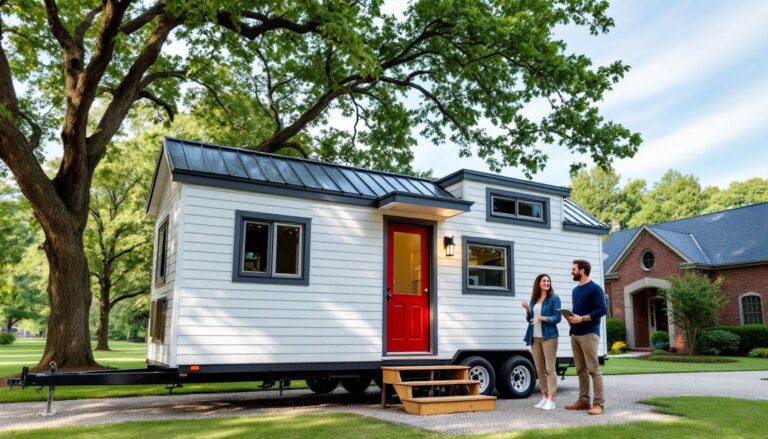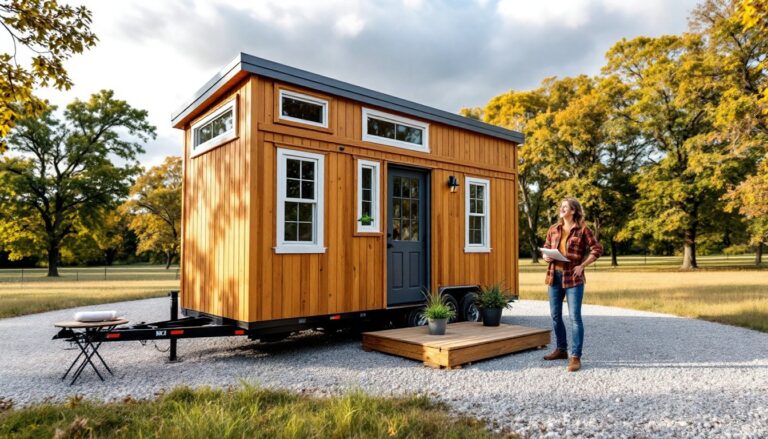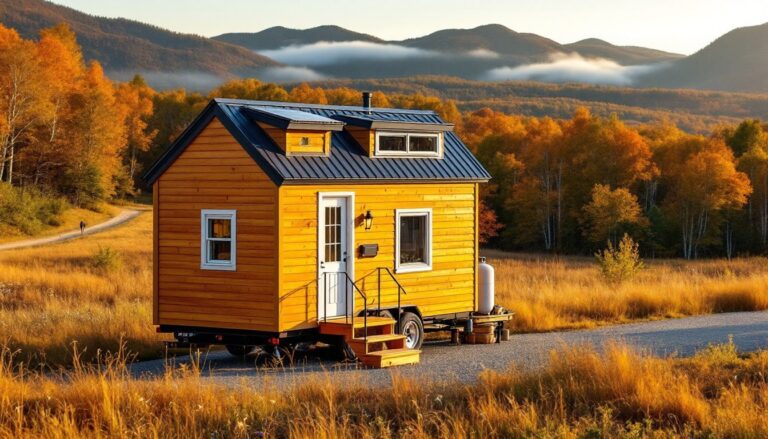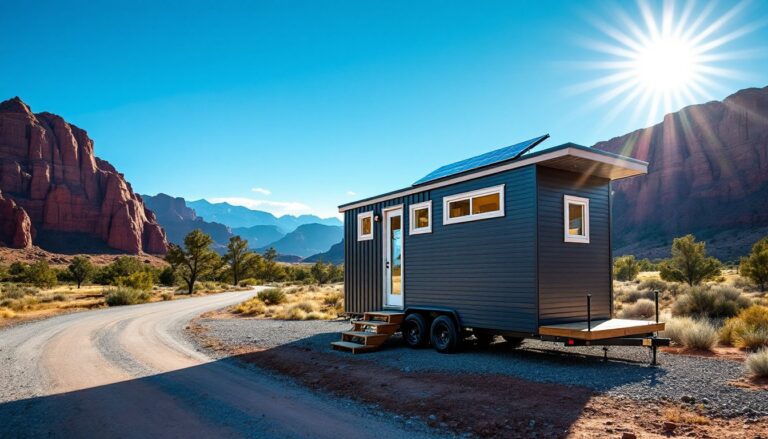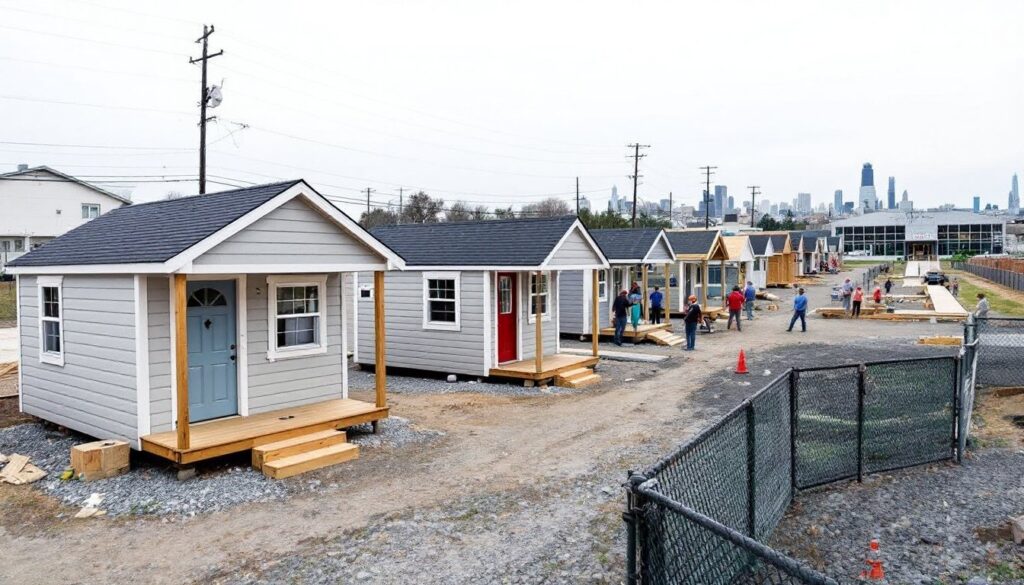

In cities across the U.S., clusters of compact structures, some as small as 64 square feet, are reshaping how communities address homelessness. These aren’t backyard sheds or emergency tents. They’re purpose-built micro-shelters with locking doors, insulation, electricity, and the dignity of private space. As housing costs spiral and traditional shelters struggle with capacity and safety concerns, tiny home villages have emerged as a practical, scalable alternative. By spring 2026, over 300 communities nationwide have launched or expanded tiny home projects, proving that thoughtful design and community investment can deliver stability faster than conventional housing development.
Key Takeaways
- Tiny homes for the homeless cost $8,000–$25,000 per unit compared to $350,000–$500,000 for permanent housing, allowing cities to house more people faster and more affordably.
- Tiny home villages can transition 60–80% of residents to permanent housing within one year when paired with case management, healthcare, and job support services.
- Successful designs prioritize insulation (R-13 or better), security features like keyed deadbolts, accessible storage, and durable materials like waterproof flooring—prioritizing dignity and function over aesthetics.
- Over 300 communities have launched tiny home projects nationwide, with proven examples like Austin’s Community First Village (400+ residents) and Seattle’s Othello Village demonstrating rapid deployment and scalability.
- Zoning challenges and NIMBY opposition remain significant barriers, but communities can overcome resistance through early public outreach, transparent safety data sharing, and neighbor site tours.
- Individuals and groups can contribute through volunteer build days, material donations, local advocacy for zoning changes, and partnering with established nonprofits like Pallet and LIHI to support tiny home village development.
What Are Tiny Homes for the Homeless?
Tiny homes for the homeless are single-occupancy or two-person dwellings, typically ranging from 60 to 400 square feet, purpose-built to provide transitional or semi-permanent housing for individuals experiencing homelessness. Unlike recreational tiny homes or luxury micro-apartments, these units prioritize function, speed of construction, and cost-efficiency.
Most designs include a steel or wood frame, insulated walls (often R-13 or better), vinyl siding or metal panels, and a basic electrical system, usually a single 15-amp circuit. Interiors feature a bed platform, compact storage, and in more developed models, a small desk or seating area. Plumbing is often centralized in shared bathhouse facilities rather than individual units, which cuts construction costs by 30–40%. Heating relies on electric baseboard units, mini-splits, or portable heaters, depending on climate and budget.
Villages are typically organized as clusters of 20–60 homes on city-owned or donated land, with shared amenities like restrooms, showers, laundry, and a community building. On-site case managers help residents access job training, mental health services, and permanent housing. Many villages have 24/7 security and resident-led governance structures. The model bridges the gap between emergency shelter and traditional housing, offering privacy, stability, and a pathway to self-sufficiency.
Why Tiny Home Villages Are an Effective Solution
The effectiveness comes down to three factors: cost, speed, and human dignity.
Cost: Building a tiny home for the homeless runs between $8,000 and $25,000 per unit, depending on finishes and site infrastructure. Compare that to permanent supportive housing, which averages $350,000–$500,000 per unit in urban areas. Even modular tiny homes shipped turnkey clock in under $50,000. Lower upfront investment means cities can house more people faster.
Speed: A dedicated crew can frame, insulate, and finish a basic 8×10-foot unit in under a week. Villages can go from groundbreaking to occupied in three to six months, compared to years for traditional affordable housing developments. This speed matters when winter’s coming or when encampment sweeps displace hundreds overnight.
Dignity: Private space transforms outcomes. Residents have a locking door, a place to store belongings, and control over their environment. Studies from similar supportive housing initiatives show that privacy and security reduce substance use relapses and improve mental health treatment adherence. Many villages report 60–80% of residents transitioning to permanent housing within a year, far exceeding typical shelter outcomes.
They’re not a silver bullet. Tiny home villages work best as part of a housing continuum, paired with case management, healthcare access, and job support. But as a bridge between the street and stability, they outperform congregate shelters on almost every metric.
Real-World Examples of Successful Tiny Home Communities
Dignity Village (Portland, Oregon): One of the oldest, established in 2000, Dignity Village houses around 60 residents in structures ranging from salvaged shacks to well-built micro-homes. Residents self-govern through elected councils and manage security, maintenance, and intake. The model proved that peer-led villages can sustain themselves with minimal city funding.
Community First. Village (Austin, Texas): This 51-acre development houses over 400 formerly homeless individuals in tiny homes, RVs, and canvas-sided micro-structures. Built and operated by Mobile Loaves & Fishes, it includes an on-site medical clinic, workshops, a community market, and art studios. Residents pay affordable rent (typically $300–$400/month) and many work on-site in social enterprises. It’s the largest village of its kind in the U.S. and serves as a design blueprint for dozens of newer projects.
Othello Village (Seattle, Washington): Opened in 2021, Othello’s 40 insulated Pallet shelters (8×8-foot units with heating, lighting, and electrical outlets) demonstrated how quickly pre-fabricated designs can deploy. The village includes gender-neutral bathrooms, laundry, and 24/7 staffing. Over 70% of residents moved into permanent housing within 18 months.
Esperanza Village (Austin, Texas): This faith-based village focuses on women and families. Units are slightly larger (up to 200 square feet) and designed for households with children. The presence of playgrounds, community gardens, and family-focused case management shows how accessible design principles can adapt to varied populations.
How Tiny Homes for Homeless Are Built and Funded
Funding: Most villages blend public dollars with private philanthropy. Cities often provide land and infrastructure (water, sewer, electrical service), while nonprofits raise money for construction and operations. Federal grants, like HUD’s Emergency Solutions Grants or CDBG funds, cover a portion, but most rely heavily on local fundraising. Volunteer labor from community groups, church teams, and DIY enthusiasts familiar with small-scale builds can cut costs by 20–40%.
Some municipalities issue RFPs for turnkey village operators. Nonprofits or developers respond with site plans, budgets, and operational models. Once approved, construction begins under local building permits, though some jurisdictions fast-track approval or grant code variances for transitional housing.
Construction methods: Builders use either stick-built framing or prefab modules. Stick-built units follow standard residential framing: 2×4 studs on 16-inch centers, OSB or plywood sheathing, vinyl or metal siding, and asphalt shingle roofing. They’re built on-site or in a staging yard and delivered by flatbed. Prefab modules arrive turnkey from manufacturers like Pallet, Crate, or Tuff Shed, often stackable for transport.
Foundations vary. Some villages pour concrete pads, others use gravel beds with pressure-treated skids, and a few deploy helical piers for faster install. Electrical hookups are typically 120V/15A circuits run from a central pedestal or panel, sufficient for LED lighting, a space heater, and phone charging. Plumbing is almost always centralized to avoid permitting headaches and freeze risks.
Design Features That Make Tiny Homes Work for Homeless Individuals
The best designs anticipate real-world use by people who may be elderly, disabled, or managing chronic health conditions.
Insulation and climate control: Units built for year-round use need at least R-13 in walls, R-19 in ceilings. Cold-climate villages add vapor barriers and skirting around bases to prevent frozen pipes in shared facilities. Heating units should be tamper-resistant and thermostat-controlled. Portable electric heaters are fire hazards: built-in baseboard or mini-split systems are safer.
Security features: Keyed deadbolts and window locks are standard. Some villages use smart locks with code access, allowing staff to check on residents during wellness visits. Windows should be large enough for egress per IRC code (minimum 5.7 square feet of opening, 24 inches high, 20 inches wide) but not so large they compromise privacy or heating efficiency.
Storage: Built-in shelving, under-bed drawers, and wall hooks maximize limited space. Residents arriving from the street often have shopping carts full of belongings, adequate storage reduces clutter and fire risk.
Accessibility: While not every unit needs to meet full ADA standards, villages should include several wheelchair-accessible homes with 36-inch doorways, no-step entries, and interior maneuvering clearances. Ramps should have slopes no steeper than 1:12.
Durability: Flooring should be waterproof (vinyl plank or sealed concrete), walls wipeable (semigloss paint or FRP panels), and fixtures vandal-resistant. These aren’t luxury finishes, they’re practical choices for high-turnover environments.
Some builders incorporate design cues from the broader tiny home movement, loft beds, fold-down tables, skylights, but functionality always trumps aesthetics. Residents need homes that work, not showpieces.
Challenges and Criticisms of Tiny Home Solutions
Tiny home villages aren’t without controversy.
Zoning and NIMBY opposition: Neighbors often resist projects, citing fears about property values, crime, or neighborhood character. Public meetings turn contentious. Some cities impose restrictive zoning, limiting where villages can locate. Legal battles delay or kill projects. Successful villages invest in community outreach early, invite neighbors to tour sites, and share crime and safety data.
Long-term viability: Critics argue tiny homes are just “nicer tents”, a temporary patch that distracts from building permanent affordable housing. They’re right that micro-shelters aren’t a substitute for deeply subsidized apartments. But in practice, villages function as transitional hubs, moving people toward stability while long-term housing develops. The two strategies aren’t mutually exclusive.
Operational costs: Running a village, staffing, utilities, maintenance, case management, costs $10,000–$20,000 per resident annually. That’s cheaper than emergency room visits, jail stays, or encampment cleanup, but it still requires sustained funding. When grants dry up, some villages struggle.
Maintenance and durability: Cheap construction leads to fast deterioration. Units built without proper insulation, roofing, or foundations need costly repairs within 2–3 years. Villages built by well-meaning but inexperienced volunteers sometimes skip critical steps, flashing around windows, proper ventilation, or grounded electrical work, leading to leaks, mold, or fire hazards. Quality matters.
Not a fit for everyone: Individuals with severe mental illness, active addiction, or behavioral issues may not thrive in village settings. Some need intensive institutional care. Tiny home villages work best for people ready to engage with services and follow community rules.
How Communities and DIYers Can Get Involved
You don’t need a nonprofit or city council to contribute. Individuals and groups can support or launch micro-shelter projects in tangible ways.
Volunteer build days: Many villages host weekend builds where volunteers frame walls, install siding, or paint interiors. No advanced carpentry skills required, organizers usually provide training and supervision. Bring a cordless drill, speed square, and work gloves. If you’ve tackled home renovation projects, you’ll recognize the workflow.
Donate materials or cash: Surplus building materials, unused insulation, leftover vinyl flooring, extra paint, often get accepted. Cash donations fund permits, electrical hookups, or furnishings. Some villages publish Amazon wishlists for household items like bedding, fans, or storage bins.
Advocate locally: Attend city council or planning commission meetings. Speak in favor of zoning changes or land dedications. Write op-eds. Organize petition drives. Policy change unlocks land and funding.
Start small: Faith groups, neighborhood associations, or DIY collectives can build a single unit as a proof-of-concept. Some communities place one or two tiny homes in church parking lots or vacant lots. These pilots build momentum and experience. Just ensure you’re compliant with local codes, transitional housing often requires special permits. If you’re experienced with projects like tiny home veterans’ housing or pet-friendly tiny homes, those skills transfer directly.
Partner with existing orgs: Groups like Pallet, LIHI (Low Income Housing Institute), or local homeless coalitions often need skilled tradespeople for electrical, plumbing, or site prep. Offering pro bono labor accelerates timelines.
Design and share plans: Architects and designers can contribute open-source plans optimized for cost and code compliance. Platforms like Dwell have featured tiny home designs that balance aesthetics with real-world constraints, adapt those principles for social impact.
DIYers bring critical skills: framing, wiring, finish carpentry, site layout. If you’ve ever wrestled with tiny house parking regulations or figured out how to maximize compact home storage, you understand the puzzle of building dignity into tight spaces. That expertise changes lives when applied to housing the most vulnerable.